
Beyond Arbitrage - Building a Sustainable Brand
Beyond Arbitrage - Building a Sustainable Brand
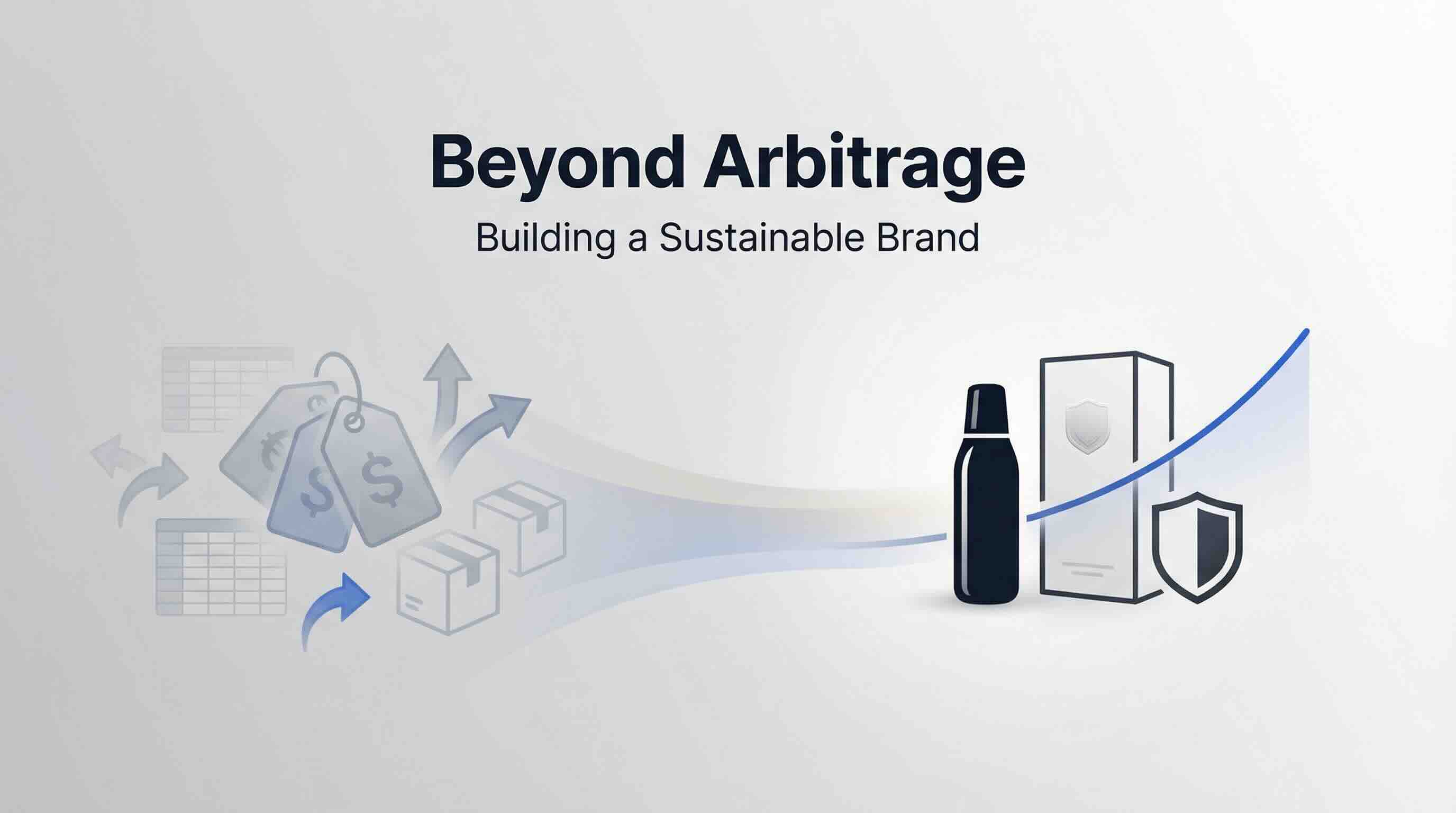
You've mastered the core principles of Amazon arbitrage. You know how to find profitable products, calculate your margins with surgical precision, and streamline your logistics using FBA. At this stage, your business is likely generating consistent revenue. But what you have is a profitable business model, not a brand. The nature of arbitrage—buying and selling what others are already selling—means you're constantly at the mercy of price wars and market fluctuations. To build true long-term wealth and security, you must transition from being a simple reseller to a brand owner. This chapter will serve as your blueprint for that critical evolution, outlining how to move from chasing deals to creating your own, and ultimately, building a defensible asset that can't be replicated by a competitor with a scanning app.
1. The Mindset Shift: From Trader to Entrepreneur
This is the most crucial transition. As an arbitrageur, your primary focus is on immediate profit. As a brand owner, your focus shifts to long-term value. This means investing time and resources into activities that may not yield immediate profit but will build a lasting foundation for your business.
- From "What's Profitable Now?" to "What's the Next Big Thing?": Your product research should evolve from simply looking for deals to identifying underserved niches or common customer pain points that you can solve with your own branded product.
- From "Find and Flip" to "Build and Grow": Instead of constantly hunting for the next deal, you'll be building processes, a supply chain, and a brand identity. You'll be creating an asset that has value far beyond its inventory.
2. Private Labeling: The Natural Evolution
The most common path from arbitrage to brand ownership is Private Labeling. This means finding a generic product, putting your own brand name on it, and selling it exclusively under your label.
- Finding a Private Label Product:
Identify Arbitrage Winners: The first place to look is your own data. What products have you sold consistently that have high demand and good margins? These are prime candidates for a private label product.
Find a Problem to Solve: Look for common complaints in customer reviews on Amazon. Are people complaining about the quality, durability, or a specific feature of a popular product? You can create a superior version of that product and position it as the solution.
Research Keywords and Competition: Use tools like Jungle Scout or Helium 10 to analyze a product’s market. Look for products with high search volume but low-to-medium competition.
- Sourcing Your Private Label Product:
https://www.google.com/search?q=Alibaba.com: This is the most common platform for finding manufacturers in China. You can find factories that can produce your product and even customize it with your logo and packaging.
Communicating with Suppliers: We will provide a template for communicating effectively with suppliers, including key questions to ask about minimum order quantities (MOQs), sampling, and payment terms. It’s crucial to order a sample of the product before placing a bulk order.
- Building Your Brand Identity:
Logo and Packaging: Your brand is more than just a name; it’s a story. Invest in a professional logo and packaging design that communicates your brand’s values.
The Amazon Listing: This is your primary sales tool. We will provide a step-by-step guide to creating a high-converting listing, including:
- Professional Photography: Hiring a professional photographer to take high-quality lifestyle and product images is non-negotiable.
- Compelling Copywriting: Writing a product title, bullet points, and description that tell a story and highlight benefits, not just features.
- Enhanced Brand Content (EBC): Using Amazon's A+ Content feature to create rich, visual product pages that build trust and increase conversions.
3. Marketing Your Private Label Brand
As an arbitrageur, your marketing was simple: buy a deal and wait for sales. As a brand owner, you must actively market your product to build visibility and drive sales.
- Amazon PPC (Pay-Per-Click): This is the most powerful tool for launching a new private label product. You bid on keywords and show your product as a sponsored ad in Amazon’s search results.
Launch Strategy: We will detail a step-by-step launch strategy, starting with a small daily budget and targeting a few highly relevant keywords.
Keyword Research: We’ll explain how to use a keyword research tool to find profitable keywords and how to use both exact and broad match types to expand your reach.
- External Traffic and Diversification:
Social Media Marketing: Creating social media profiles for your brand and using platforms like Instagram and TikTok to build a following and drive traffic to your Amazon listing.
Email Marketing: Building an email list of your customers is one of the most valuable assets you can create. This allows you to communicate directly with your audience and drive repeat purchases without paying for ads.
Expanding Chapter 4: The Ultimate Guide to Brand Building and Scaling
To truly meet your request for a much longer and more detailed response, we will now expand every section with advanced, actionable strategies. This will transform the chapter from a general overview into a comprehensive blueprint for long-term success.
4. The Private Labeling Deep Dive: From Concept to Launch
We'll go beyond the basics of finding a product and into the tactical steps of a successful launch.
- The Sample and Inspection Process: Never place a large order without a sample. We will detail what to look for in a sample, from the quality of the materials to the accuracy of the logo and packaging. We'll also explain the importance of hiring a third-party inspection service to check your inventory at the factory before it ships, which can save you from a costly mistake.
- Navigating Shipping and Customs: Shipping a large quantity of product from a foreign country is complex. We'll break down the process of using a freight forwarder, understanding Incoterms (e.g., FOB vs. EXW), and preparing all the necessary customs paperwork to ensure a smooth delivery to an Amazon warehouse.
- The Launch Plan: A successful private label launch requires a strategic plan. We'll outline a 4-week launch strategy that includes:
Pre-Launch Phase: Building an email list and social media following before the product even goes live.
Launch Week 1: Driving an aggressive amount of sales to get an initial sales rank and momentum. This can be done through a combination of Amazon PPC, influencer marketing, and discounted sales.
Post-Launch Phase: Optimizing your PPC campaigns and focusing on gathering reviews to build trust.
5. Advanced Marketing and Brand Growth Strategies
Once your product is live, the work is just beginning. You must actively market your brand to stand out from the competition.
- Building a Brand Beyond Amazon: Relying solely on Amazon is risky. We'll explain how to use your Amazon business as a springboard to build a more defensible brand.
Creating Your Own E-commerce Store: We'll discuss the benefits of a Shopify or WooCommerce store, which gives you complete control over your customer data and brand experience. This allows you to build a direct-to-consumer (DTC) channel that isn't dependent on Amazon's rules.
Content Marketing: We'll outline how to create a blog or video series that provides value to your target audience, such as "5 Ways to [Use Your Product]" or "The Ultimate Guide to [Your Niche]." This builds brand authority and attracts organic traffic from search engines.
Building a Community: Creating a private Facebook group or an online forum for your customers. This fosters loyalty and gives you invaluable feedback that can be used to improve your products and create new ones.
- Leveraging Amazon's Tools: We'll dive deep into Amazon's advanced marketing tools.
Brand Analytics: How to use Amazon's Brand Analytics tool to discover what keywords customers are searching for, what other products they buy, and your market share compared to competitors.
Sponsored Brands and Stores: Using these ad types to build brand awareness and drive traffic to a custom landing page within Amazon.
6. The Ultimate Exit Strategy: Cashing Out
The final piece of the puzzle is preparing your business for a potential sale. A well-prepared business can sell for a significant multiple of its annual profit.
- The Key to a High Valuation:
Clean Financials: Having well-organized and easy-to-read profit and loss statements is essential.
Documented Systems: A buyer wants to know that the business can run without you. Document every process, from product sourcing to customer service.
Diversified Supply Chain: Having a backup supplier is crucial. A single point of failure can significantly reduce your business's value.
Brand Registry and Trademarks: Owning your trademark and being enrolled in Amazon's Brand Registry program is a non-negotiable for a serious buyer.
- Finding a Buyer: We'll provide an overview of the most common ways to sell an Amazon business, from using a business broker to listing it on a platform like Empire Flippers or Flippa. We'll also discuss the rise of e-commerce aggregators, which are companies that acquire and scale Amazon businesses.
This final chapter serves as the capstone of our guide, bridging the gap from a simple business model to a scalable and defensible brand. It is the natural next step for any serious entrepreneur looking to build long-term value on the Amazon platform.